Science in 60 seconds
Every paper has a story.
Strong research often stays out of reach for people like you and me. We unravel it into videos of about a minute that answer the questions you actually live with, and check every claim against the original paper.
Latest videos
The newest videos
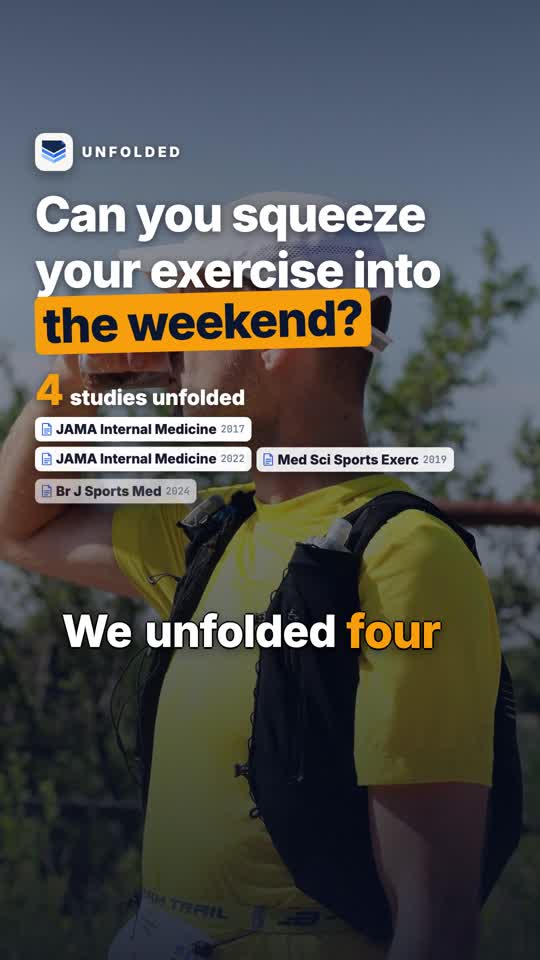
Can you squeeze your exercise into the weekend?
- Backed by science: 1–2 days a week: lower risk of dying
- Backed by science: Same total: similar risk
- Not backed: Only daily exercise counts

Does money buy happiness?
- Backed by science: Higher income went with feeling better day to day, even above $75,000
- Backed by science: The difference is small
- Not backed: Happiness stops at $75,000 for everyone
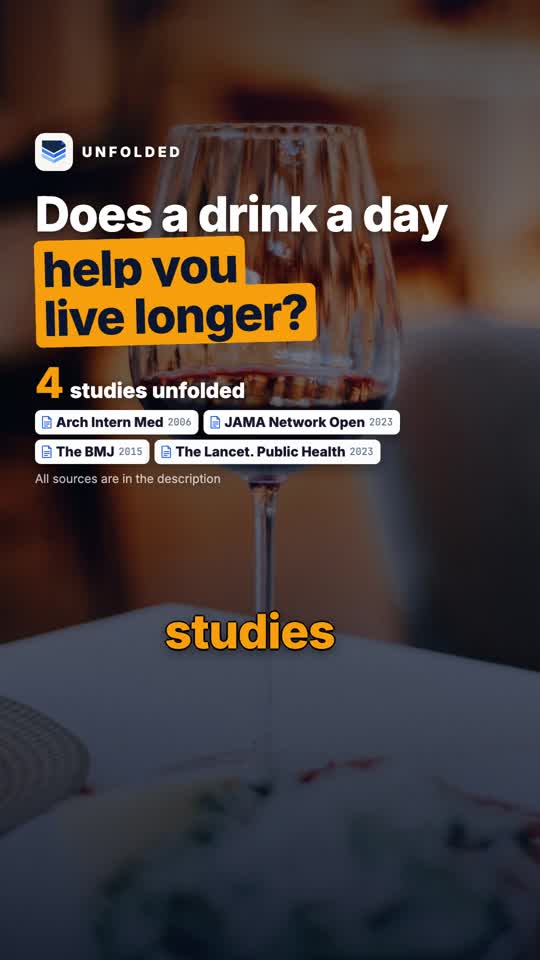
Does a drink a day help you live longer?
- Backed by science: Heavier drinking: higher risk of dying early
- Backed by science: Many studies mixed ex-drinkers into the non-drinkers
- Not backed: A daily drink makes you live longer
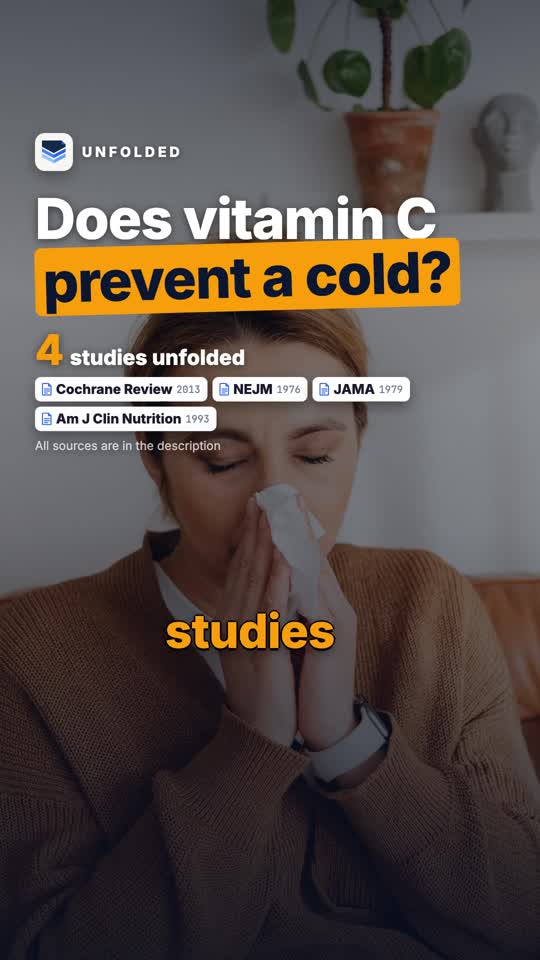
Does vitamin C prevent a cold?
- Backed by science: No fewer colds for most people
- Backed by science: Colds slightly shorter with daily use
- Not backed: It helps once you're already ill

Should you go for a walk after eating?
- Backed by science: Short walks after meals → smaller blood-sugar rise
- Backed by science: Strongest after dinner
- Not backed: Long-term health effects (studies: max. 2 weeks)

Do brain-training games make you smarter?
- Backed by science: You get better at the games you practise
- Backed by science: Video games did as well as a brain app
- Not backed: Brain games make you smarter in general
Send us a claim to check
The claim you keep hearing and never quite believe. The best questions become videos.
How we check
Every claim, traced to the paper
What's backed by science, what's not, and how sure we can be: that's the promise, so the work behind each minute is open. Here is one claim from the video about 10,000 steps.
One claim, followed from video to paper
- In the video
Its scientific basis? Limited.
- In the paper
…this number has limited scientific basis.
Lee et al. 2019 · JAMA Internal Medicine · full paper read - Checked✓ Found word for word in the paper
Five rules for every video
- 1One question per videoEvery source must answer that exact question. If it answers a neighbouring question, it's out.
- 2Leading journals firstTop journals like Science, NEJM, JAMA, PNAS and Cochrane, and the leading journals of each field. Every source is labelled on our research page.
- 3Checked word for wordEvery claim in a video is linked to a literal quote, and software confirms that quote is really in the paper.
- 4Limitations, alwaysSmall sample? Only in a lab? Only in teenagers? We say so, in every video.
- 5Backed vs not backedEvery video ends with what science supports, and what it doesn't.

Why UNFOLDED exists
“I kept seeing how much strong, careful research stays out of reach for people like you and me.”
Research is written for other scientists, and that precision matters. But for the rest of us it is dense and hard to follow. Meanwhile, the questions we actually live with get answered by headlines and hunches.
So I take one real question, find the best research on it, and unfold it into a video of about a minute. I'm not a researcher myself. That is exactly why every claim is tied to a quote from the paper.
Philippe BrouwersFounder of UNFOLDED